

From AAC devices appearing in children’s toys to characters using communication technology in television, books, and digital media, pop culture is reshaping how augmentative and alternative communication (AAC) is perceived. What was once viewed as niche or clinical is increasingly becoming visible, normalized, and understood in mainstream society.
And visibility changes everything.
When AAC appears in everyday spaces — on store shelves, in storylines, in classrooms, and across social platforms — it shifts the narrative from limitation to empowerment. It signals that diverse communication methods are not rare exceptions, but part of the human experience. For families new to AAC, this representation reduces stigma and replaces uncertainty with familiarity. For peers, it fosters curiosity and empathy rather than confusion.
Cultural visibility also accelerates innovation.
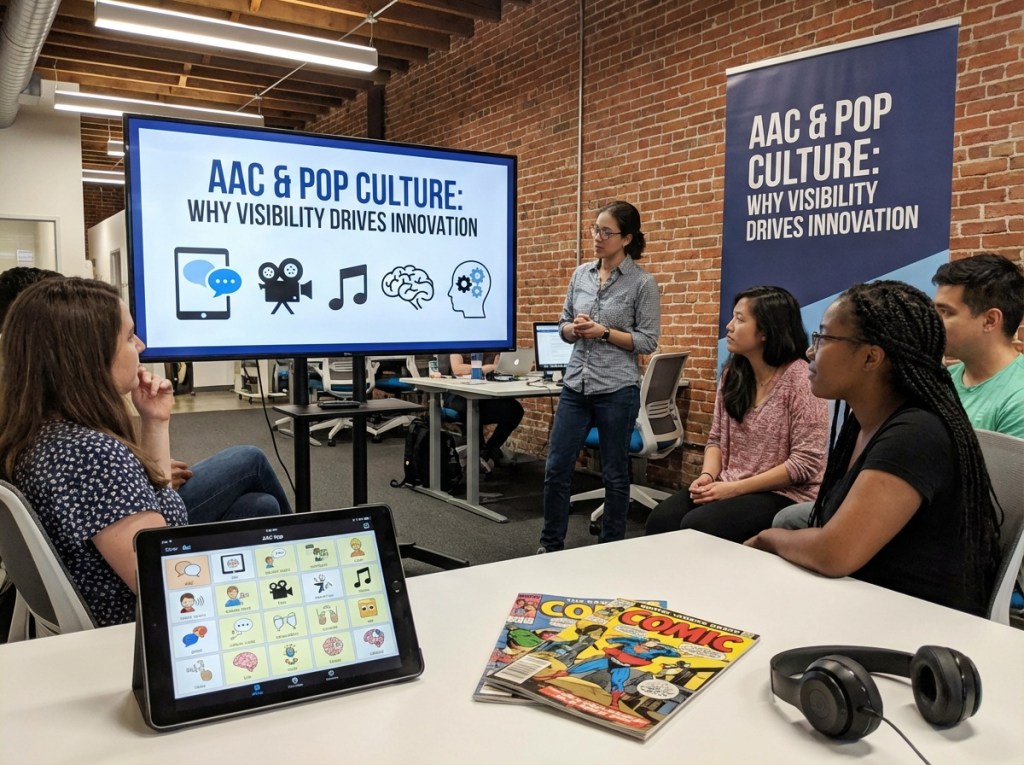
As AAC becomes part of broader conversations around accessibility and inclusion, it attracts increased investment, research attention, and interdisciplinary design thinking. Technology companies begin prioritizing usability and aesthetics alongside functionality. Developers consider personalization, intuitive interfaces, and seamless integration with mainstream devices. Investors recognize that accessibility technology is not a small market — it is a growing, global need.
Representation influences expectations. When AAC users see themselves reflected in toys, media, and leadership roles, the standard shifts from “having access” to “having excellent access.” The conversation moves beyond basic functionality toward dignity, design, and user experience. This pressure drives companies to innovate faster, build smarter, and listen more closely to the communities they serve.
Most importantly, representation empowers AAC users themselves. Seeing communication devices normalized in public life validates lived experiences and reinforces that their voice — however it is expressed — belongs in every setting: schools, workplaces, healthcare systems, and social spaces.
As society increasingly embraces diverse communication methods, the future of AAC is becoming more inclusive, more integrated, and more human-centered. Pop culture may not build the technology — but it helps build the environment where that technology can thrive.
And when culture and innovation move together, adoption follows.
Leave a Reply