
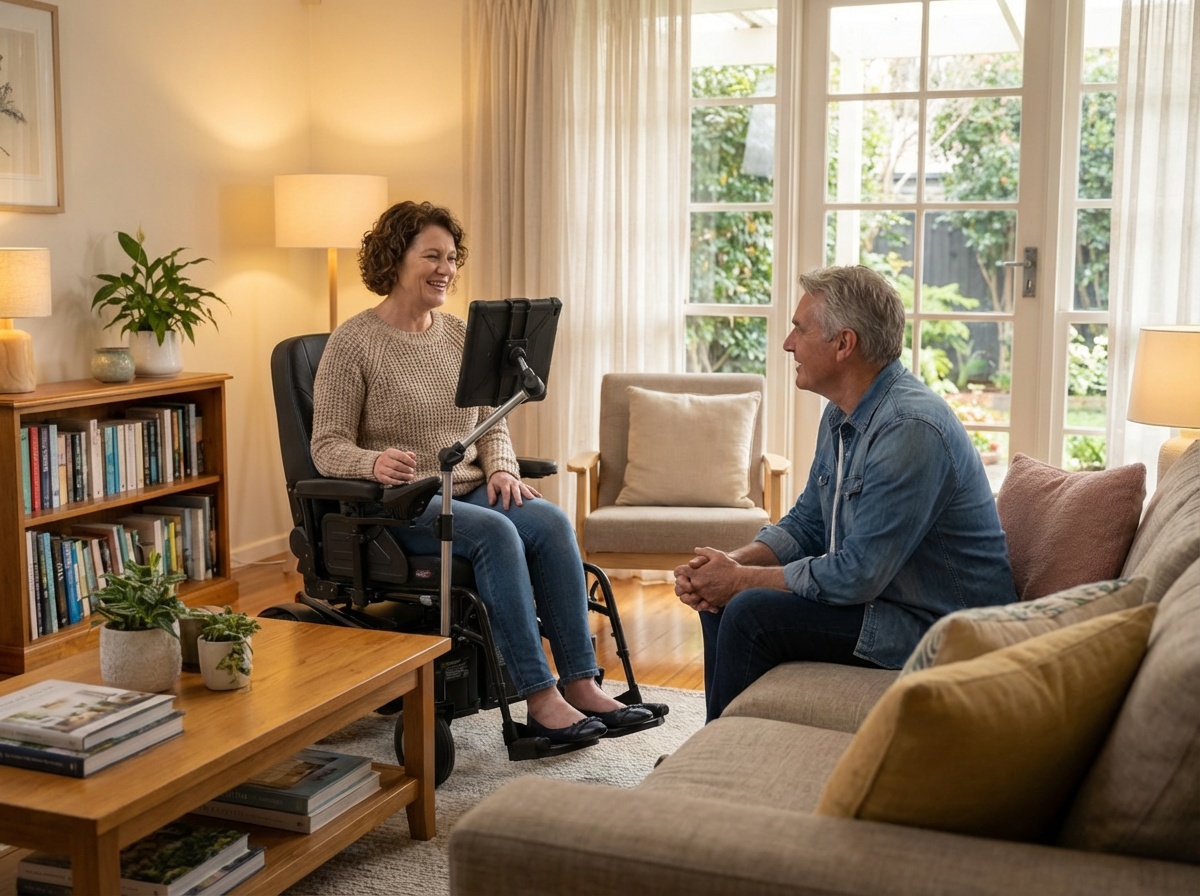
Eye tracking has become one of the most transformative advancements in augmentative and alternative communication (AAC). What began as a specialized access method has evolved into a highly refined, precision-driven technology that is redefining how individuals with complex communication needs interact with the world.
Recent advances in tracking accuracy, response speed, predictive text algorithms, and intuitive editing capabilities have dramatically expanded what eye-gaze communication can accomplish. Modern systems are faster to calibrate, more stable in dynamic environments, and capable of adapting to subtle user movements. This has made eye-gaze AAC accessible to a broader population — from young children developing early literacy skills to adults recovering from stroke, to older individuals experiencing progressive neurological conditions.
But the impact goes beyond access.
One of the most significant breakthroughs in modern eye tracking is its ability to reduce cognitive and physical fatigue. Earlier generations of eye-gaze systems often required extended concentration and repetitive correction. Today’s precision hardware and intelligent software minimize dwell time errors, improve selection accuracy, and integrate predictive language modeling that anticipates user intent. The result is smoother navigation, faster communication, and less effort required to express complex thoughts.
This efficiency has meaningful real-world implications. When communication requires less energy, users can sustain longer conversations, participate more fully in academic or professional settings, and engage socially without exhaustion becoming a barrier. Communication shifts from being a task to being a natural interaction.
Eye tracking is also paving the way for adaptive, responsive AAC systems. Emerging innovations allow devices to adjust interface layouts based on user behavior, environmental conditions, and changing needs throughout the day. Real-time responsiveness ensures that the technology supports the individual — not the other way around.
As AAC continues to evolve toward intelligent, user-centered design, eye-gaze technology is becoming foundational to that progress. With decades of expertise in precision eye tracking, EyeTech remains at the forefront of this next generation of assistive communication — developing solutions that are not only accurate, but intuitive, efficient, and built for real-world use.
Leave a Reply