
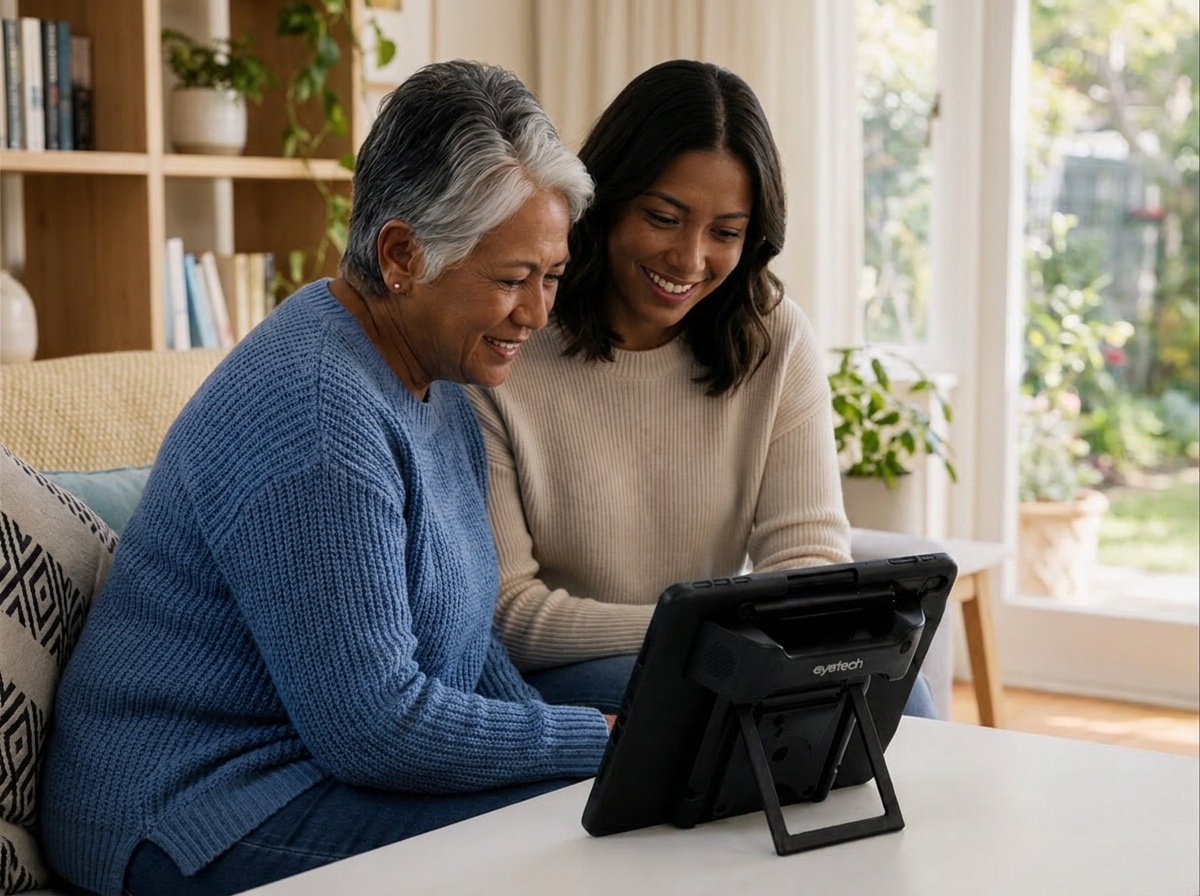
Getting a new eye gaze AAC device is a milestone moment — but the first few weeks can feel overwhelming. Calibration questions, vocabulary setup, wondering whether your child or loved one will ever take to it. You are not alone. The good news: there are a handful of setup decisions that make a huge difference, and they are all straightforward. Here are five things to do right away.

1. Calibration Tips
Calibrate the first time using the device to establish an accurate baseline. After that, recalibration is only needed when eye gaze accuracy begins to decline, or when there is a major change in the user’s positioning — for example, moving from a bed to a wheelchair. When choosing where to sit during calibration, be mindful of large windows directly behind the user. UV light flooding in from behind can overwhelm the eye tracker, making it difficult for the camera to detect the user’s pupils.
2. Start With Core Vocabulary, Not Fringe
It is tempting to program in every specific word your loved one might need — favorite foods, names of pets, TV shows. Resist this urge at first. Core vocabulary — words like “want,” “more,” “stop,” “go,” “help,” “no,” “me,” “you” — powers 80% of everyday communication. Build those pages first. Specific vocabulary can grow naturally over weeks and months.
3. Mount It at Eye Level (Literally)
This sounds obvious, but a device that is even slightly off-axis forces the user to strain and affects accuracy over time. Use a mounting arm that allows for fine adjustment. When in doubt, aim for the device screen to be directly in front of the user’s face, roughly 18–24 inches away.
4. Give It 20 Minutes a Day for the First Two Weeks
Consistent short sessions beat occasional long ones. Set a timer for 20 minutes and use the device during a low-pressure activity — a favorite show, a snack, a simple game. This builds familiarity without pressure to “perform.” Many SLPs call this aided language input: you model by using the device yourself to comment on what is happening.
5. Connect With Your SLP Early
An eye gaze AAC device is a communication system, not just a piece of hardware. A speech-language pathologist who specializes in AAC can help you set up vocabulary, calibrate expectations, and troubleshoot. If you do not yet have an SLP, our team can point you toward resources. Do not wait until something goes wrong to reach out.
Setup is just the beginning. Every EyeOn device comes with onboarding support, and our team is always reachable if you hit a wall. The journey to confident communication starts with one good day, then another.
Leave a Reply