
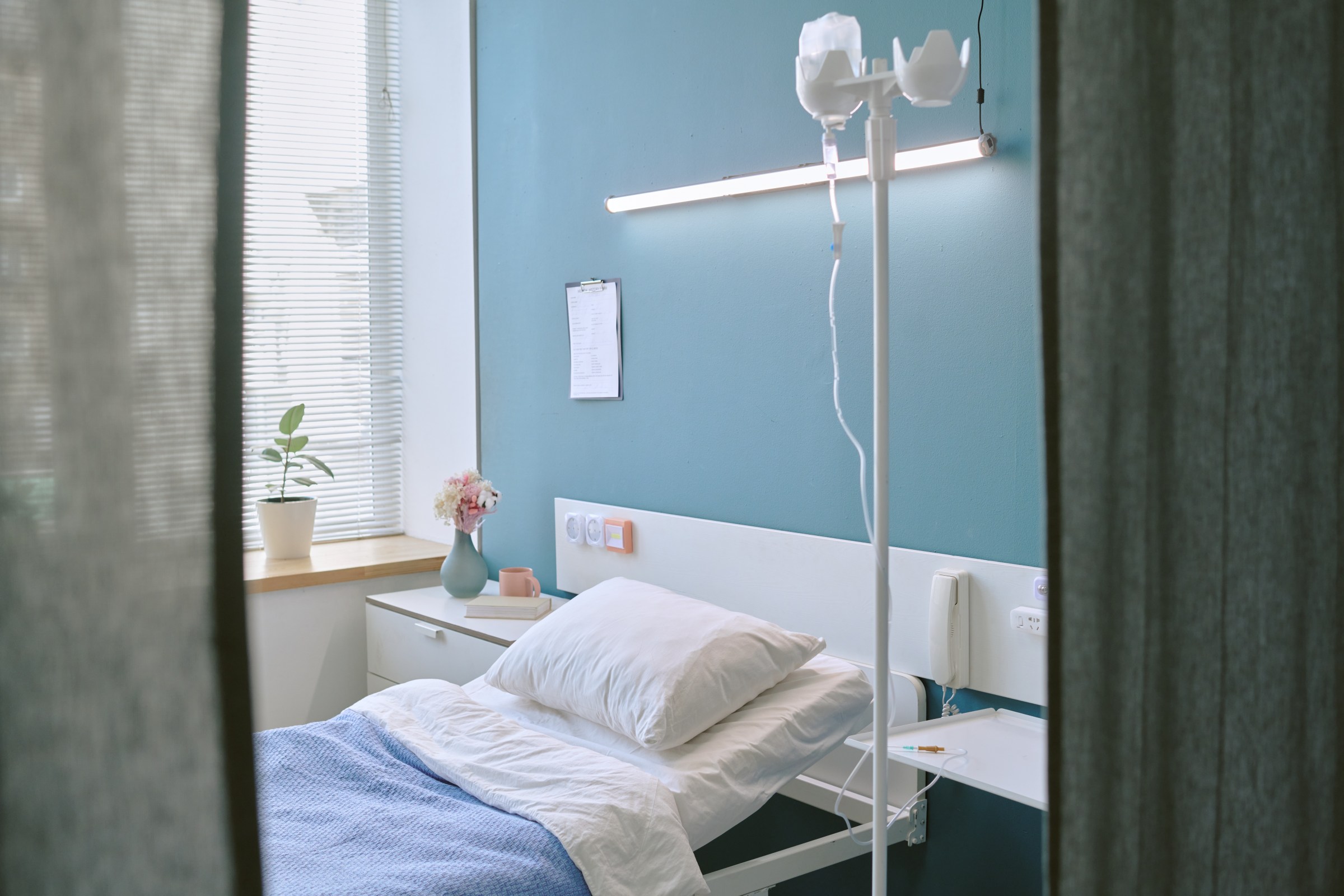
In an acute care setting, the ability to communicate can be the difference between a patient whose needs are understood and one who is left guessing whether anyone knows they are in pain. EyeOn Air LifeLine was built specifically for that environment, where speed, simplicity, and reliability are not conveniences — they are necessities.
Built for the Realities of Acute Care
Hospital rooms are not classrooms or living rooms. Lighting changes by the hour, patients may be flat on their backs, and staff need a device that works with minimal setup time. LifeLine is designed to be mounted quickly on a hospital bed or wheelchair and calibrated in minutes, even for patients who are newly non-verbal.
A Vocabulary Built for the Moment
LifeLine ships with a pre-built medical vocabulary set covering pain reporting, basic needs, yes/no responses, and requests to see family or staff — so patients are not starting from a blank page during one of the most vulnerable moments of their lives.
Why Speed of Deployment Matters
Clinicians at ATIA 2025 shared case studies where fast-deployment eye gaze AAC reduced patient agitation and improved the accuracy of pain reporting. LifeLine was built around that same principle: a patient who loses speech suddenly, whether from intubation, stroke, or surgery, should not have to wait days for a communication option.
Partnering with Hospitals and Care Teams
EyeTech works directly with hospital case managers, speech-language pathologists, and rehabilitation teams to integrate LifeLine into existing care protocols, including staff training so that any team member on shift can help a patient get set up.
Closing
Losing the ability to speak is frightening enough without also losing the ability to be heard. EyeOn Air LifeLine exists to close that gap as quickly as possible. If your facility is exploring inpatient AAC solutions, reach out to our clinical partnerships team to talk through implementation.
Leave a Reply