
Mealtime happens every day, usually more than once, and it is packed with natural opportunities to model language — which makes it one of the best routines for building AAC skills without adding a single extra task to your day.
Why Mealtime Works So Well
Meals are predictable, repetitive, and full of concrete choices: more, all done, hot, cold, like, different. That repetition is exactly what makes core vocabulary stick. A child does not need a new lesson plan — they need the same words modeled consistently, meal after meal.
What Modeling Looks Like at the Table
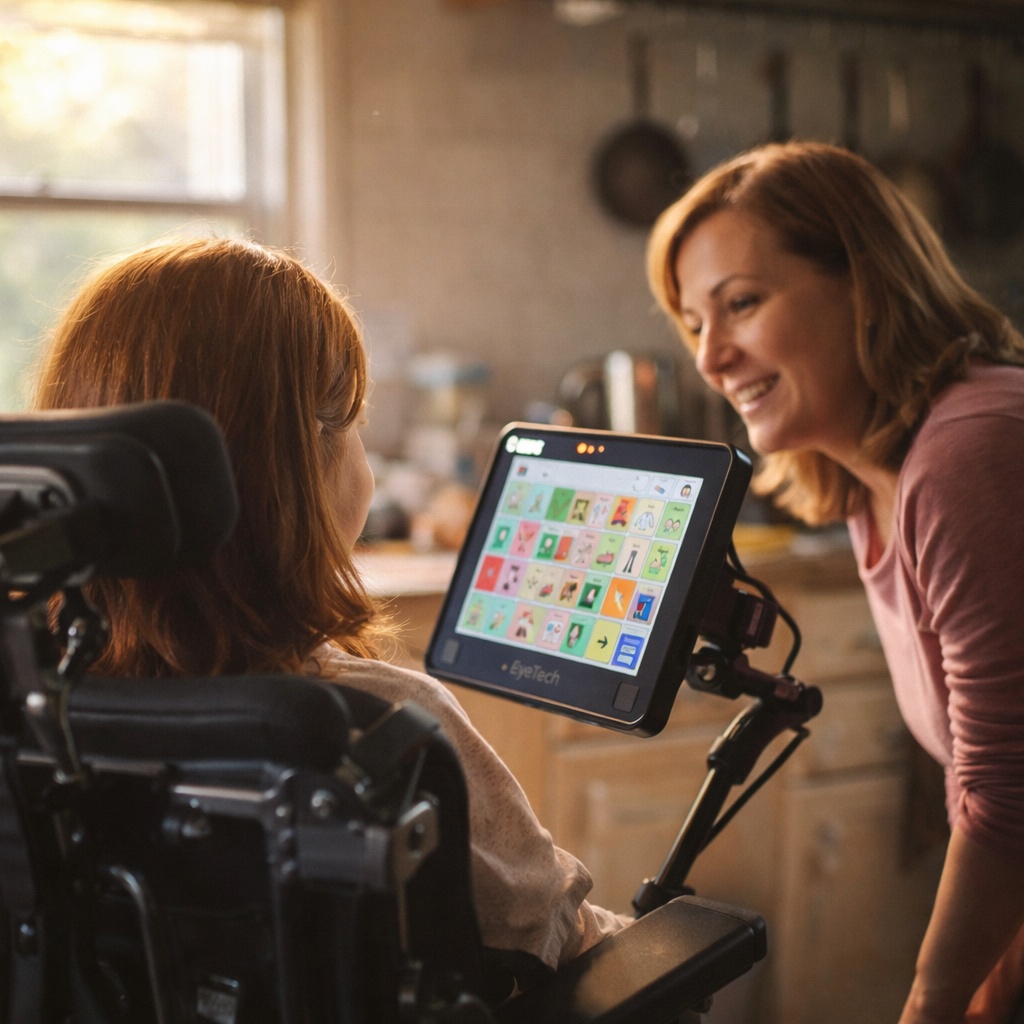
Aided language input simply means using the device yourself while you talk, without requiring a response. Narrate what’s happening: hit ‘more’ while offering more, hit ‘hot’ while blowing on soup, hit ‘all done’ while clearing a plate. The goal is exposure, not a quiz.
A Starter List of Mealtime Vocabulary
- Want / more / all done
- Hot / cold
- Like / no like
- Help / open
- Different / again
Common Pitfalls to Avoid
It is easy to slip into only modeling when prompting a response (‘Can you tell me more?’). Try to model at least as often without expecting anything back. It is also easy to give up after a few quiet meals — remember that receptive understanding usually builds well before expressive use appears.
Building the Habit
Pick one meal a day to be your dedicated modeling window, even five minutes, and stay consistent. Over weeks, this small daily habit compounds into real vocabulary growth.
Closing
You do not need a formal therapy session to build AAC skills — you need dinner. Consistency at the table, more than any single technique, is what makes core vocabulary click. If you would like help mapping out mealtime vocabulary on your EyeOn device, our onboarding team can walk through page setup with you.
Leave a Reply