
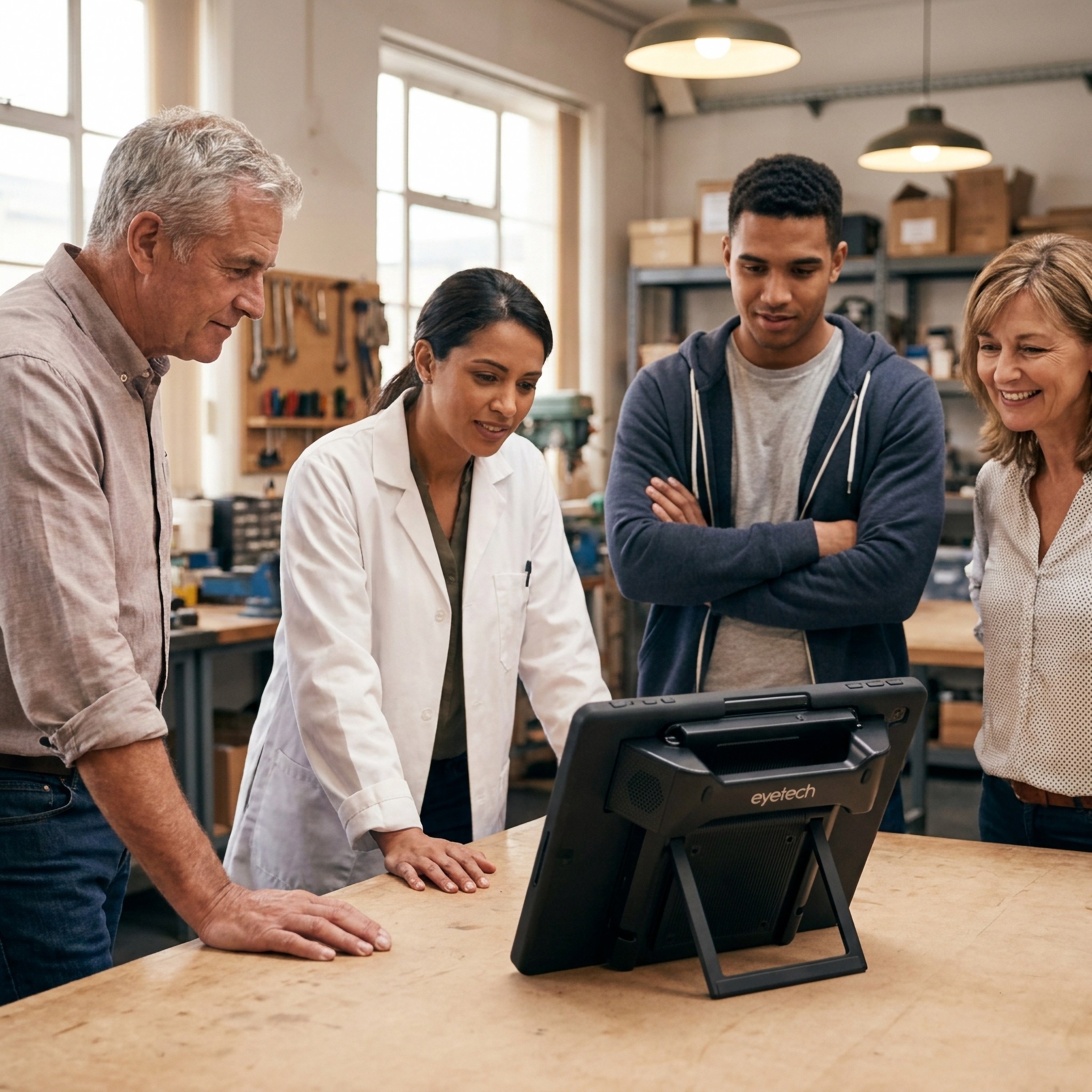
An eye gaze device asks a lot of its hardware — precision tracking, long battery life, and durability across years of daily use. Here is a look at how that engineering comes together.

Engineering for Real Life, Not Just the Lab
It is one thing for a device to track accurately in a controlled testing environment. It is another for it to perform reliably in a sunlit kitchen, a moving wheelchair, or a hospital room at 2 a.m. Every EyeTech device is tested across these real-world conditions before release.
Testing Beyond Specifications
Hardware durability testing includes drop testing, extended battery cycling, and mount stress testing designed to simulate years of daily use compressed into weeks of lab time.
Listening to Users First
Many hardware refinements over the years have come directly from user and SLP feedback — mounting adjustments, screen glare reduction, and battery life improvements have all been shaped by real feedback from real households and classrooms.
What’s Next
EyeTech continues to invest in tracking accuracy across a wider range of eye conditions and lighting environments, guided by the same principle behind every device we build: meet the user where they are, not the other way around.
Closing
Good hardware should be reliable — it should simply work, every day, without asking the user to think about it. That is the standard we hold every EyeOn device to.
Leave a Reply