
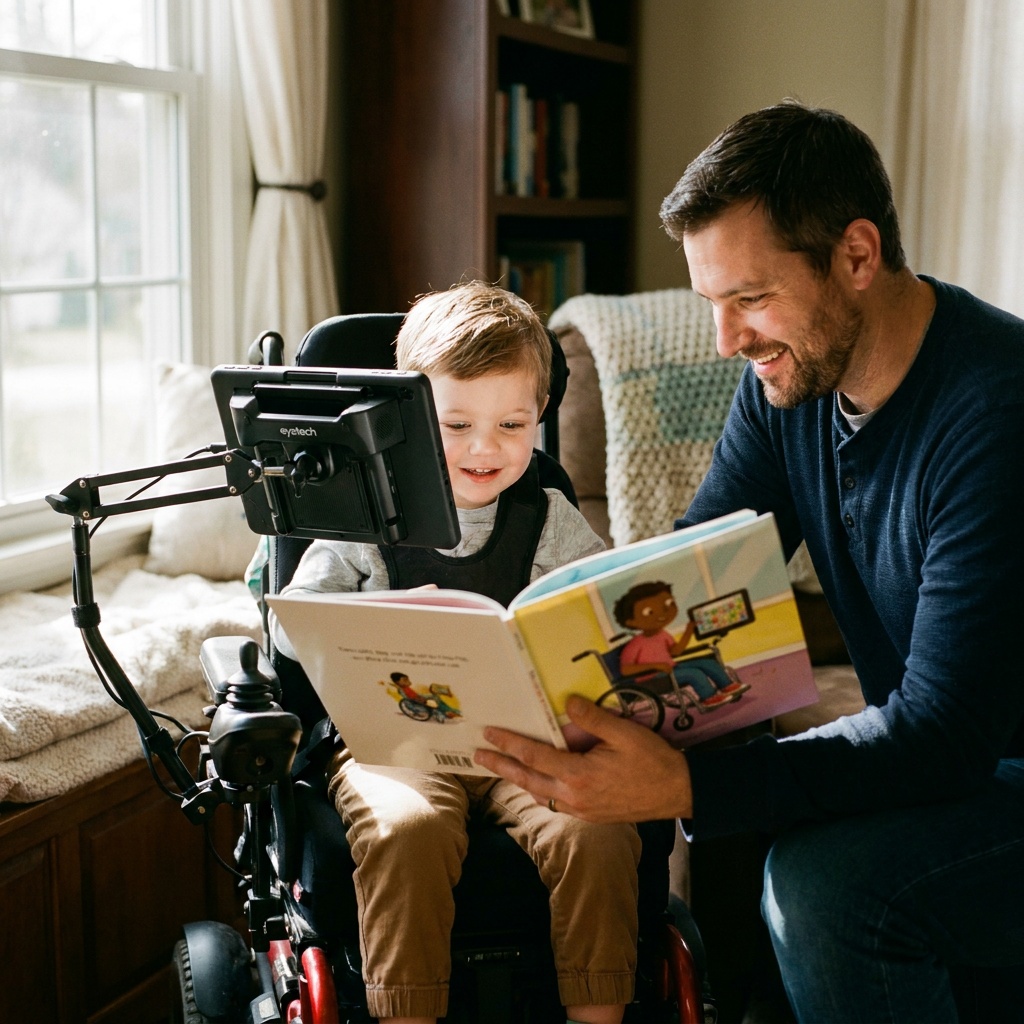
Screens get most of the attention when we talk about disability representation, but picture books shape how young children understand the world just as powerfully — and AAC is slowly, finally, starting to show up on the shelf.
A Small but Growing Shelf
For years, books featuring AAC users were rare and often clinical in tone. A newer generation of children’s authors and illustrators, some working directly with disabled consultants, are writing AAC characters as simply part of the story — going to school, having feelings, making friends.
Why Books Matter Differently Than Screens
A picture book gets read again and again, often at bedtime, in a child’s most receptive moments. A character who uses a communication device in a story a child returns to nightly builds familiarity in a way a single television episode cannot.
What to Look For
The best representation avoids treating a character’s AAC use as the entire plot. Look for stories where the AAC-using character has hobbies, friendships, and adventures — with communication device as simply one detail among many, the same way a character might wear glasses.
Starting the Conversation at Storytime
If a book features an AAC-using character, it is a natural, low-pressure entry point to ask a child what they notice, whether they know anyone who communicates that way, and what questions they have.
Closing
Representation on the page plants seeds early. As more of these stories reach library shelves and classrooms, the next generation of kids may grow up simply expecting communication diversity as part of everyday life.
Leave a Reply