
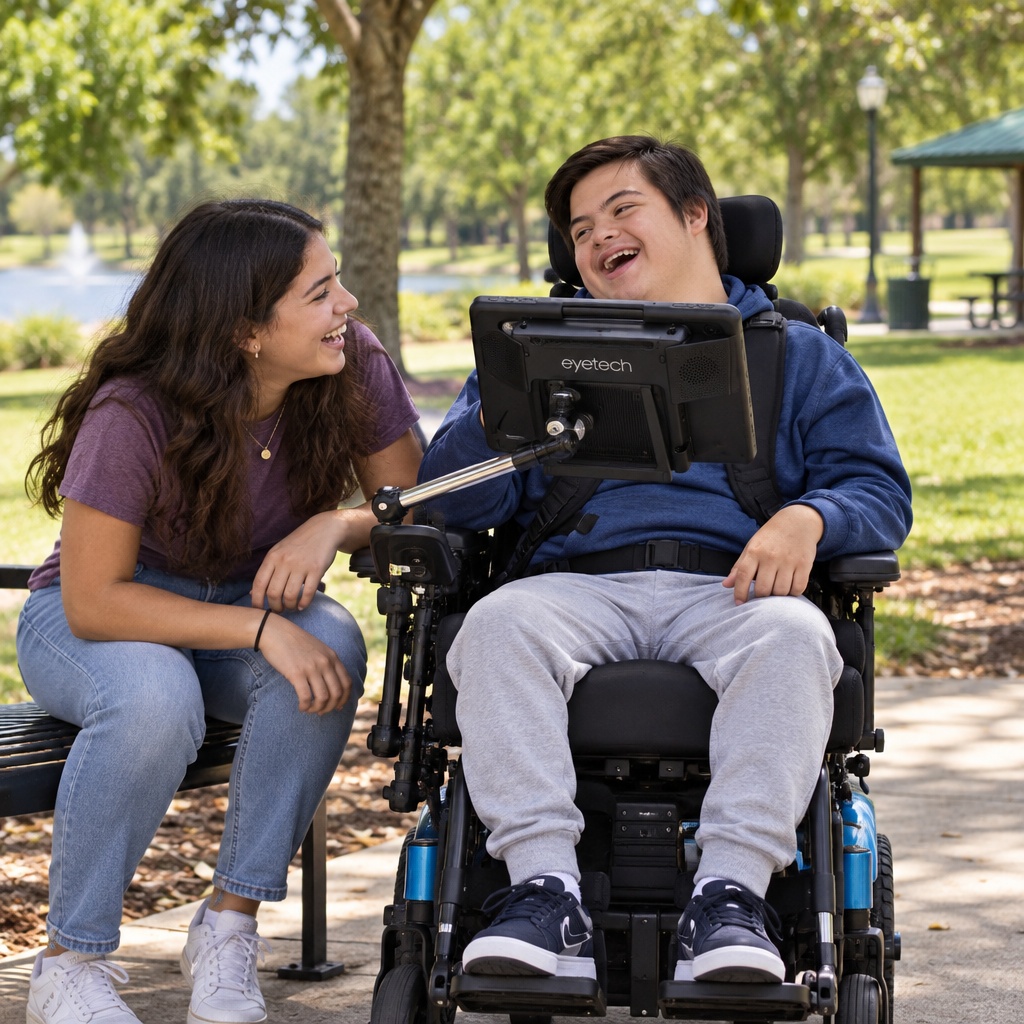
High-tech AAC is life-changing. But even the best device can have a bad day. Bright sunlight can interfere with eye tracking. A device may need repair. A power outage, a hospital stay, or a trip to the pool can all put a device out of reach.
That’s why every eye gaze user should have a low-tech backup — a no-battery method that keeps communication going no matter what.
When You’ll Need a Backup
- Outdoors in bright sun, where lighting can affect calibration.
- In the bath, shower, pool, or at the beach.
- During medical procedures or hospital admissions.
- While traveling, in transit, or during a power outage.
- When the device is charging, updating, or being serviced.
5 Low-Tech Tools Worth Having
1. A reliable yes/no system. This is the foundation. Agree on clear signals — such as looking up for yes and down for no, or one blink versus two — and share them with every caregiver, teacher, and clinician.
2. An E-TRAN (eye transfer) board. A clear frame with letters or symbols grouped around the edges. The partner holds it up between themselves and the user, and follows the user’s gaze to identify selections. It’s one of the fastest no-tech options for eye gaze communicators.
3. A printed copy of the device’s core board. Keeping symbols in the same locations as the device means the user doesn’t have to learn a new system. Laminate it for durability.
4. Partner-assisted scanning. The partner reads options aloud or points to them one at a time (“Is it food? Drink? Bathroom?”), and the user signals when they hear the right one. It takes practice but requires nothing more than a patient partner.
5. An alphabet board. For literate users, spelling letter by letter can express absolutely anything, including things nobody thought to program.
Tips for Making Your Backup Plan Work
- Practice when things are calm. Don’t wait for an emergency to try the E-TRAN board for the first time.
- Make multiple copies. Keep one in the car, one in a wheelchair bag, and one in the hospital go-bag.
- Include an “about me” card. A short card explaining how the person communicates helps new staff and first responders get it right quickly.
- Write down the yes/no signals. Post them near the bed and include them on the “about me” card.
- Keep the device charged and ready. Long battery life helps, but a simple nightly charging routine is still the best defense.
Backup Doesn’t Mean Second Best
Some families worry that using low-tech tools will slow progress on the device. The opposite is usually true. Having multiple ways to communicate — sometimes called a multimodal approach — gives users confidence and keeps them talking in every setting. Want printable backup boards that match your EyeTech device layout? Contact our team and we’ll help you get set up.
Leave a Reply