
Halloween is one of the most social nights of the year. Kids knock on doors, compliment costumes, and trade candy with friends. For AAC users, it’s also a fantastic, low-pressure chance to practice communication with dozens of friendly neighbors in a single evening.
With a little planning, trick-or-treating can be fun, inclusive, and full of wins. Here’s how to get ready.
Step 1: Program Halloween Vocabulary Ahead of Time
Add a quick-access Halloween page or button set a week or two before the big night. Useful phrases include:
- “Trick or treat!”
- “Thank you!” and “Happy Halloween!”
- “I’m a ___” (so they can tell people about their costume)
- “I like your costume!” and “Your house looks spooky!”
- “No thank you” and “I can’t eat that” (helpful for food allergies)
- A few fun words: SCARY, SILLY, BOO, MORE, and a favorite candy.
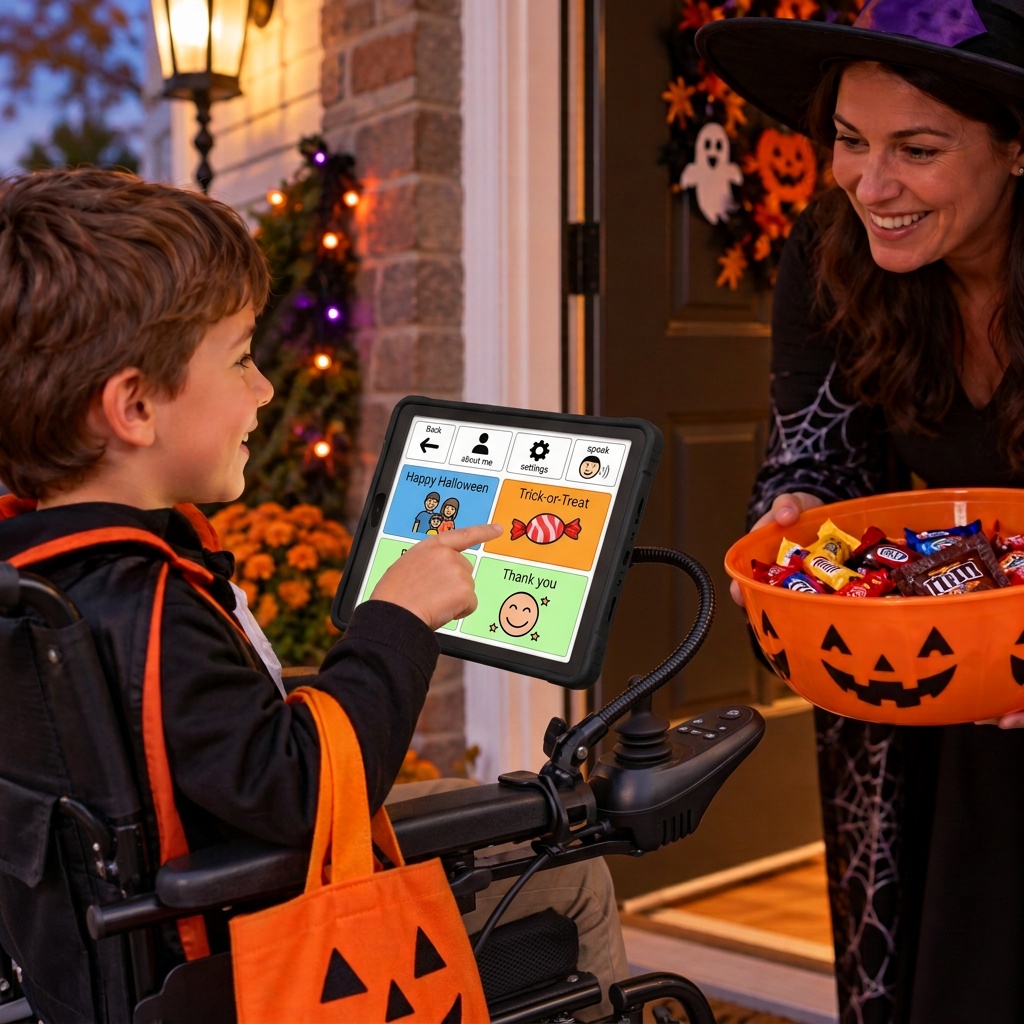
Step 2: Practice at Home
Set up a pretend front door with family members handing out treats. Practicing the routine a few times helps the whole evening feel familiar. It’s also a great opportunity for siblings to model the vocabulary.
Step 3: Pick a Costume That Works With the Device
The best costumes are built around the person’s real needs, not in spite of them. A few ideas that make the most of wheelchairs, mounts, and devices:
- Vehicles: a rocket ship, race car, pirate ship, or fire truck built around a wheelchair.
- Space explorers: an astronaut whose device becomes mission control.
- TV characters: a favorite cartoon hero, or a panda who loves outer space — a nod to Paolo from Carl the Collector.
- Robots or DJs: costumes where the glowing screen is part of the look.
Whatever you choose, make sure the costume doesn’t block the eye tracker, cover the speaker, or strain the mount.
Step 4: Protect Your Device
- Keep face paint and makeup away from the eye area if they might interfere with eye tracking.
- Bring a light cover or bag in case of rain.
- Double-check that the mount is locked tight before heading out.
- Turn the volume up so neighbors can hear over the excitement.
- Pack your low-tech backup board in case lighting makes eye tracking difficult outdoors.
Step 5: Set Up for Success
- Go early while it’s still light and quieter.
- Choose accessible streets with smooth sidewalks and few steps.
- Add lights to the costume, wheelchair, or bag so you’re visible.
- Give neighbors a heads-up. A friendly “She’s going to say something to you!” encourages people to wait and listen.
- Look for teal pumpkins, which signal homes offering non-food treats.
Make It About Fun
Halloween doesn’t have to be a therapy session. If your child wants to just enjoy the night, let them. Every “trick or treat” and “thank you” is a win — and so is simply having a blast with friends.
We’d love to see your costumes! Share your Halloween photos with us @eyetechds.
Leave a Reply